
For Manhattan townhouse owners considering a sale this fall or next spring, some of the most important work happens long before the property comes to market. Townhouses are among Manhattan’s most distinctive properties, and maximizing their value requires far more than reviewing recent sales or applying a price-per-square-foot calculation.
With townhouse sales volume reasonably strong in the first half of the year, owners considering a sale have an opportunity, but preparation and strategy are essential. The first step is to understand the property’s true market value and how it compares with townhouses currently for sale and those that have recently sold. From there, deciding which improvements are worthwhile and how best to present and launch the property can significantly influence both the final sale price and the time it takes to sell.
For owners contemplating a sale in fall 2026 or spring 2027, here are the key considerations to keep in mind now.
Start With a Clear Understanding of Value
Pricing a townhouse is fundamentally different from pricing a condo or co-op. With an apartment, comparable sales can often provide a relatively straightforward framework. Townhouses are much more individual, and their value can vary significantly based on factors such as width, depth, location, number of floors, condition, outdoor space, light, architectural details, views, and potential additional buildable square footage.
A knowledgeable townhouse broker will evaluate not only recent sales, but also the competition currently available to buyers and the characteristics that make one house more desirable than another.
For example, an 18-foot-wide townhouse can command a very different price than a 15-foot-wide property. A single-family home may appeal to a very different buyer than a multi-family property. An elevator, high ceilings, a landscaped garden, original architectural details, multiple exposures, or significant unused air rights can all affect value. Even the location on the block and the buildings surrounding the house can affect pricing.
For multi-family properties, tenant status, rental income, leases, the Certificate of Occupancy, and open permits can also substantially affect what a buyer is willing to pay.
This is why a townhouse valuation should never be based simply on a price-per-square-foot calculation or the sale of the house next door. The right broker needs to understand the nuances of the individual property, how it compares with the alternatives available to buyers, and the buyer pool it is most likely to attract.
Presentation Can Directly Impact Value
After establishing a realistic market value, the next step is to identify which cost-effective staging or updates could help the house appeal most strongly to today’s buyers.
Townhouses often range from 3,000 to 7,000 square feet, which means that a full-house staging project can be expensive and, in some cases, unnecessary. Strategic staging is often more effective. The goal is to focus resources on the spaces that make the strongest impression and help buyers understand the home’s possibilities, while also ensuring there is something memorable at the end of the showing.
Make the Parlor Floor Shine
If one floor is going to receive the most attention, it should generally be the parlor floor. It is most often the first floor a buyer sees and where they experience the house’s architectural character, scale, ceiling height, and overall condition. Furniture should emphasize the size and flow of the space rather than overwhelm it. Saleable architectural details should be visible, surfaces should be uncluttered, and rooms should feel both elegant and livable.
Use Light to Your Advantage
Natural light can be one of the biggest challenges in a townhouse. Because these homes are often long and bordered by neighboring properties, light usually enters each floor primarily from the front and rear. Thoughtful additional lighting can make an enormous difference. Lamps, overhead fixtures, accent lighting, and dimmers can brighten darker areas and create warmth without making the house feel artificially illuminated.
If a townhouse has skylights, multiple exposures, oversized windows, or other architectural features that bring in natural light, those features should be showcased.
Don’t Overlook the Exterior
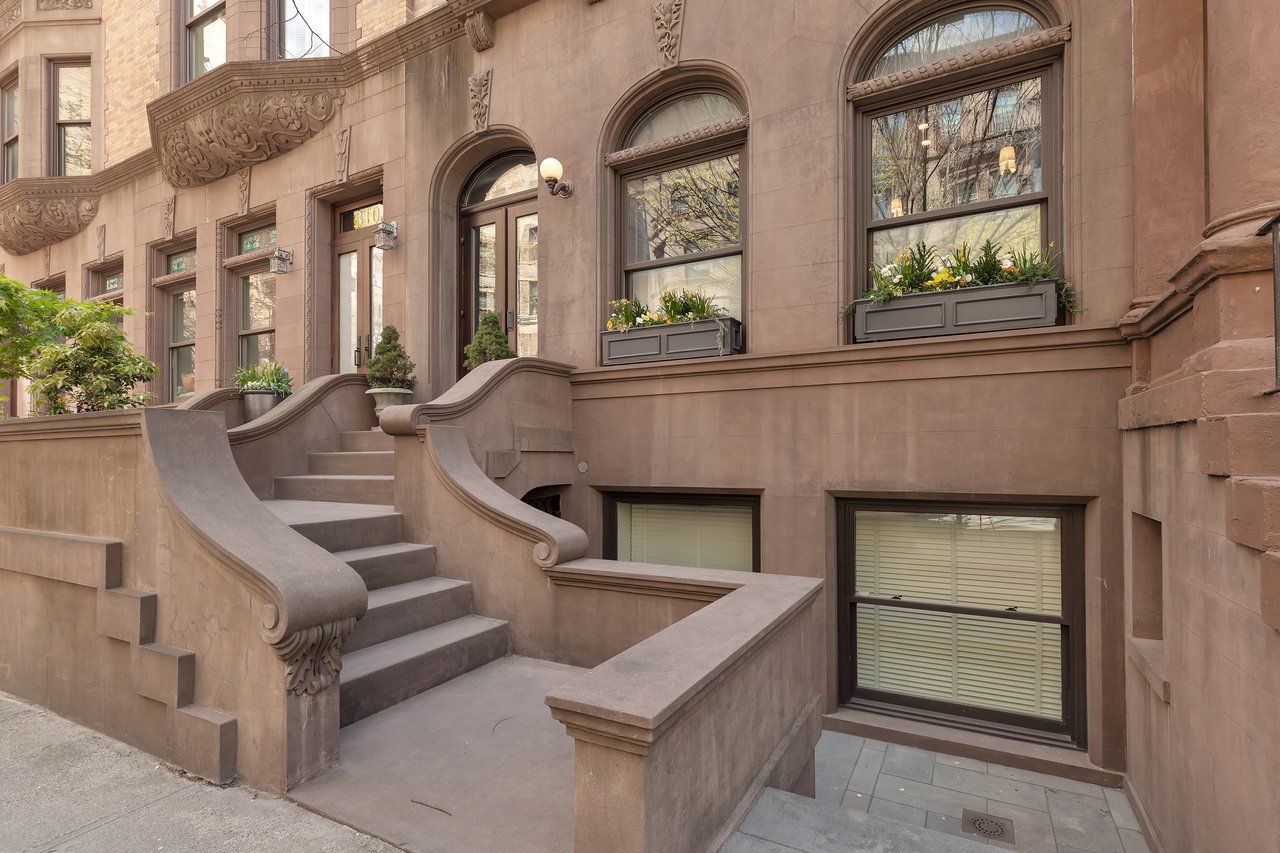
A beautiful townhouse exterior can create a positive impression before a buyer even walks through the front door. The stoop, entry, façade, landscaping, window boxes, and garden should all communicate that the property has been carefully maintained. Clutter, trash cans, dead plants, and neglected landscaping can immediately detract from the impression of the house.
Professional cleaning of a brick or masonry façade, fresh plantings, or a thoughtfully refreshed front door can be relatively modest investments that have an outsized impact on first impressions.
Make Outdoor Space Feel Like an Extension of the Home
Gardens, terraces, and roof decks are among the features that distinguish townhouse living from apartment living. They should therefore be presented as true living spaces rather than simply areas outside the house.
Well-chosen furniture can demonstrate how a space can be used for entertaining, dining, relaxing, or gardening. Seasonal planting can also help outdoor areas feel cared for and inviting regardless of the time of year.
Consider Strategic Updates
Targeted improvements can often deliver a better return than a larger renovation undertaken solely for a sale. Fresh paint in key rooms, updated lighting, new or refreshed appliances, improved bathroom fixtures, or repairs to visible areas of wear can make a house feel substantially more polished without requiring full-scale renovation.
The key is determining which improvements buyers are likely to notice and value, and which are unlikely to produce a meaningful return.
Timing the Market—and the Property
There is no single “best” month to bring every Manhattan townhouse to market. The right timing depends not only on overall market activity, but also on the individual property, competing inventory, the seller’s objectives, and how much preparation the house requires.
Fall can provide an important selling window, while spring traditionally brings another period of increased activity. But timing should not be considered independently of preparation. A seller who wants to take advantage of a particular market window needs to work backward from that date, allowing enough time for painting, repairs, landscaping, staging, photography, floor plans, and the development of the marketing strategy.
Pricing is equally important. A townhouse generally receives its greatest concentration of attention when it is first introduced to the market. Positioning it correctly at that moment, relative to both recent sales and to the properties buyers can choose from today, can be critical. Overpricing can diminish that initial opportunity, while thoughtful pricing can create urgency and competition.
The objective is to have the property, the pricing, and the market timing working together from the moment the house is introduced.
The Advantage of Starting Early
For townhouse owners considering a sale in fall 2026 or spring 2027, starting now does not mean committing to a sale. It means giving yourself the time to understand what the property may be worth, what, if anything, should be done before bringing it to market, and when the strongest opportunity to sell may be.
Townhouses are highly individual properties, and the decisions that maximize value are equally individual. One house may benefit substantially from staging and cosmetic improvements; another may be better brought to market largely as-is. One may face very little direct competition, while another may need to be positioned carefully against several similar properties. Those distinctions should shape the strategy well before a listing price is determined.
With sales volume reasonably strong during the first half of 2026, the townhouse market has demonstrated a healthy level of activity. But market conditions alone do not determine the outcome of an individual sale. The goal is to list a property that has been thoughtfully prepared, accurately positioned, and properly priced to take full advantage of buyer interest when it is strongest.
For owners considering a sale this fall or next spring, starting early offers a valuable advantage: the ability to make thoughtful decisions about the property and its positioning before the pressure of a specific launch date takes over.